Category: Decolonization of the Mind
Overview
Colonization does not end when a flag changes or a foreign government withdraws. It can remain embedded in memory, language, religion, self-worth, and the imagination. This essay examines inherited fear, cultural shame, internalized inferiority, and self-policing: and asks what it would mean to become intellectually free.
What beliefs have we inherited: and who taught us to accept them as truth?
That question is not academic.
It is intimate.
It enters the body before we learn how to name it.
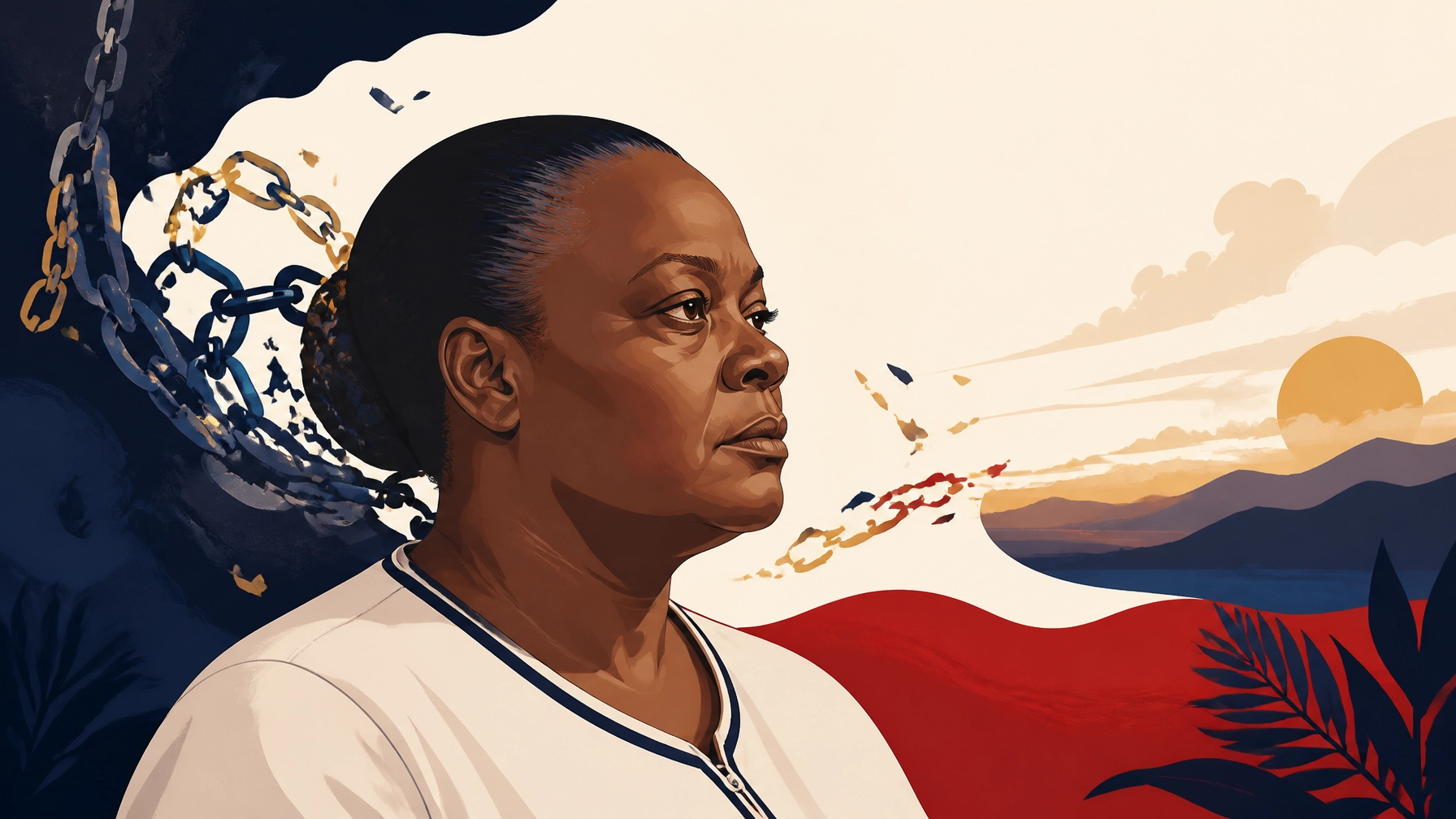
We think of chains, and we envision metal links binding wrists and ankles. We imagine iron, punishment, confinement. But what we seldom recognize is that the most enduring chains are not of iron. They are chains of the mind, chains that bind not the body but the imagination.
A person can walk freely and still live within an architecture of captivity.
A nation can declare independence and remain psychologically governed by the values of the power it defeated.
This is the contradiction we must confront.
Independence Does Not Automatically Produce Freedom
Haiti offers one of the clearest examples.
In 1804, formerly enslaved people defeated the French colonial order and established the first independent Black republic in the modern world. The Haitian Revolution shattered the colonial assumption that enslaved people could not govern themselves, define their own freedom, or determine their own future.
The victory was historical.
The punishment was also historical.
France later imposed an indemnity on Haiti, forcing the new nation to compensate former colonizers for the loss of enslaved people and property. Foreign intervention, economic isolation, occupation, and political interference deepened the wound. Independence existed formally, but sovereignty remained contested.
The message was clear.
You may leave the plantation, but the world will continue to organize itself around the plantation’s logic.
That logic does not survive only in treaties, debt systems, schools, or governments. It enters the psyche. It teaches people to doubt their own capacity. It persuades them that foreign approval is evidence of worth. It converts domination into common sense.
Colonization survives psychologically after political independence because political freedom changes authority before it changes imagination.
The mind requires its own liberation.

The Fear We Inherit
Inherited fear is one of colonization’s most durable instruments.
It is the fear of appearing too Black, too African, too Haitian, too local, too spiritual, too angry, too free.
It is the fear of speaking with an accent.
It is the fear of questioning the religion, language, history, or morality handed down by institutions that once declared our ancestors inferior.
The fear may no longer announce itself as colonial.
It may arrive as respectability.
It may sound like advice from a parent who is trying to protect a child from humiliation. It may appear as a warning not to challenge authority, not to criticize religious leaders, not to use Kreyòl in formal spaces, not to wear natural hair, not to speak openly about racial injustice.
The intention may be protective.
The origin may still be oppressive.
This is how historical violence becomes psychological inheritance. The original threat disappears, but the nervous system continues to anticipate punishment.
We learn to censor ourselves before anyone else has to.
That is self-policing.
It is colonization operating without a visible colonizer.
When Religion Becomes a Measure of Civilization
Religion can offer meaning, moral structure, community, and healing.
It can also be used to establish hierarchy.
Colonial powers often presented European religious forms as evidence of civilization while portraying African spiritual systems as primitive, dangerous, or demonic. In Haiti, the stigmatization of Vodou became part of a broader campaign to sever people from African memory and indigenous authority.
The problem is not faith itself.
The problem is what happens when faith is fused with cultural erasure.
A person begins to believe that holiness must look European. That intelligence must speak French. That morality must be authorized by an institution that once defended enslavement. That ancestral practices are shameful because the colonizer named them so.
The question is not whether someone believes.
The question is whether the belief was chosen freely.
A religion inherited under threat may still contain comfort. It may still contain wisdom. But comfort does not make every inheritance innocent.
We must be willing to examine what has been sanctified.
We must be willing to ask who benefits when a people distrust their own ancestors.
The courage to question is not spiritual betrayal.
The courage to question is intellectual responsibility.
Language and the Wound of Inferiority
Language is never merely a tool for communication.
It is also a declaration of belonging.
In Haiti, Kreyòl is spoken by the overwhelming majority, while French has historically carried greater institutional prestige. This hierarchy teaches a devastating lesson: the language closest to the people is treated as ordinary, while the language associated with colonial power is treated as superior.
A child learns more than vocabulary.
The child learns which voice receives respect.
The child learns which accent opens doors.
The child learns that intelligence may require distance from home.
This is how cultural shame enters the mouth.
A person begins to correct their natural speech before anyone corrects it for them. They translate their thoughts into the language of approval. They become fluent in self-erasure.
The same pattern appears across the African diaspora and Indigenous communities. Colonial languages dominate education, law, business, and public legitimacy. Local languages are tolerated as cultural ornaments but excluded from authority.
That is not inclusion.
That is containment.
To reclaim language is not to reject learning another language. It is to reject the belief that one’s first language is evidence of inferiority.
The mind begins to loosen when the voice no longer asks permission to exist.

The Colonizer’s Gaze Within
Internalized inferiority does not always sound like self-hatred.
Sometimes it sounds like preference.
Preference for lighter skin.
Preference for straighter hair.
Preference for European names, features, accents, histories, and standards of beauty.
Preference for foreign institutions over local knowledge, even when the local knowledge has sustained generations.
Colonialism taught the colonized to see themselves through an external gaze. The body became a document to be evaluated. The mind became a room waiting for permission. The culture became something to defend rather than something to inhabit.
This is why self-policing is so powerful.
No one has to stand at the door when the guard has been installed inside.
We monitor our clothing. We monitor our language. We monitor our beliefs. We monitor our anger. We monitor our ambition.
Not to become whole, but to remain acceptable.
Not to process pain, but to conceal it.
Not to define ourselves, but to avoid being punished for the definition we might choose.
The inner world becomes fractured by constant surveillance.
Decolonization begins when we identify the voice performing the surveillance.
Is it ours?
Or is it an inherited echo?
A Different Kind of Liberation
The forthcoming book The Colonization of the Mind: Breaking the Invisible Chains of Thought develops this question across history, identity, religion, language, and power. Its central concern is not the rejection of culture or spirituality. It is the recovery of choice.
We cannot choose consciously what we refuse to examine.
We cannot inherit a belief, call it natural, and then mistake obedience for freedom.
Mental liberation requires memory.
It requires historical clarity.
It requires the courage to distinguish tradition from conditioning, faith from fear, humility from inferiority, and unity from enforced sameness.
Human unity does not demand that we erase difference.
It demands that we stop using difference as a justification for domination.
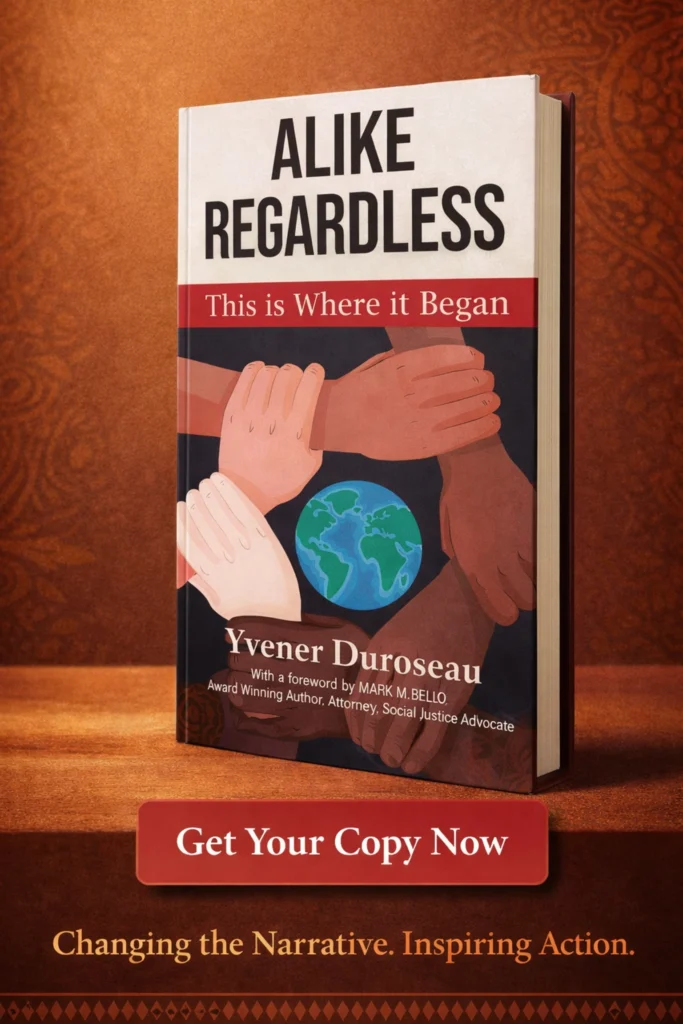
That conviction also grounds my published book, Alike Regardless: This Is Where It Began, which explores how self-reflection, love, and a recognition of shared humanity can challenge the divisions we have normalized.
But unity without truth becomes sentiment.
Truth without compassion becomes another form of violence.
We need both.
The Chain and the Key
The most difficult chains to break are the ones mistaken for identity.
The belief that shame is humility.
The belief that silence is peace.
The belief that obedience is morality.
The belief that proximity to colonial standards is progress.
The belief that our ancestors left us only wounds and no wisdom.
These beliefs can be challenged.
Not overnight.
Not through performance.
Through attention.
We listen to the stories beneath our reactions. We examine the histories beneath our institutions. We question the images beneath our definitions of beauty, intelligence, holiness, and success.
The courage to remember.
The courage to question.
The courage to choose again.
This is not a rejection of the past. It is a refusal to let the past remain occupied.
The chains we cannot see are real.
So is the key.
And the key begins with the question we were taught not to ask:
What beliefs have we inherited: and who taught us to accept them as truth?