
Reclaiming the Mind,
Rewriting Our Future
An invitation to examine the ideas, fears, and assumptions that shape our lives — and to decide which ones still deserve authority. Reclaiming the mind is not simply an act of reflection. It is the beginning of rewriting the future.
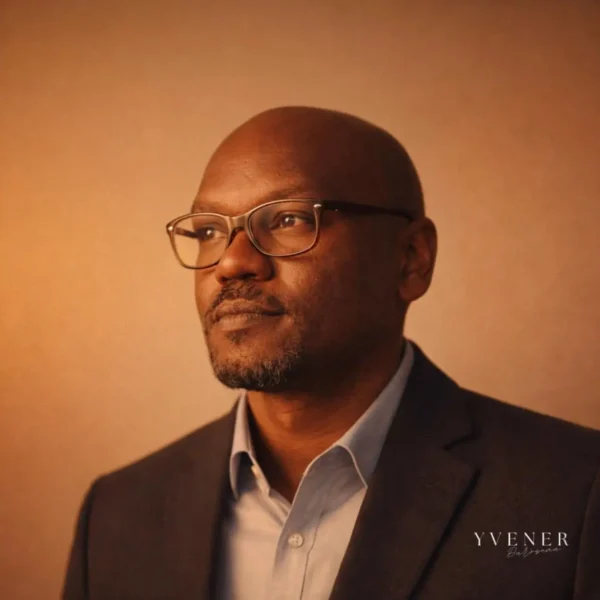
Yvener Duroseau is a Haitian-born author, cultural commentator, and speaker whose work explores the relationship between history, identity, faith, culture, and decolonization. Through his writing and public conversations, he examines how inherited narratives shape our understanding of worth, belonging, and possibility.
He is the author of Alike Regardless: This Is Where It Began and The Colonization of the Mind: Breaking the Invisible Chains of Thought. He also hosts Who Taught You That? — A 1804 Renaissance Podcast — where he engages scholars, activists, and creatives in conversations about language, spirituality, education, identity, and mental liberation.
Rooted in Haiti's history and connected to broader global struggles for freedom and dignity, his work invites people to question inherited beliefs, reclaim their agency, and participate in the transformation of themselves and their communities.

Alike Regardless
A reflective and accessible exploration of human unity in a divided world. Written during a time of global tension, the book invites readers to examine the roots of hatred, fear, and division — and to rediscover our shared humanity through self-reflection and love.
“Alike Regardless is spectacular. I urge everyone to go back to this book. You have to read it, regardless of the colour of your skin.”
— Rene Godefroy, motivational speaker & humanitarian
The Forthcoming Book

The Colonization of the Mind
This book examines how colonial systems continue to shape our beliefs about faith, language, history, identity, culture, education, and human worth.
Rooted in Haitian history and personal reflection, it invites readers to question inherited narratives, reclaim their authority to define themselves, and pursue genuine mental and collective liberation.
Conversations That Help Us Question What We Were Taught

A talk show and media platform celebrating Haiti's history, culture, and future while exploring liberation, identity, and global power.

Voices of Impact
“The author does an amazing job walking the reader through the journey of how division has torn apart humankind, then introduces love as the key to healing these wounds. I would highly recommend it to anyone looking to understand how hatred and bias have caused division — and what steps need to be taken to move forward as a society.
Kerry D. RosadoCEO & Founder, Dyvergent Consulting Group
“This man is a breath of fresh air in a polluted social justice atmosphere. I get very frustrated with the slow pace of progress and the negativity of our rhetoric, but Yvener and his book advance an absolutely contagious positivity. If all of us adopted his demeanour and philosophies, the world would be a far better place.
Mark M. BelloAward-winning author, attorney & social justice advocate
“This book provides insight. It educates, and it demonstrates how to love, how to accept yourself, your race, and how to understand that we are made equal. We are alike regardless of race, skin, colour.
Shouberte Jean BaptisteAuthor
Why did you move away from Christianity after being raised in the church?
I was raised in a deeply Christian household and spent decades actively involved in church life. Over time, through historical study, self-reflection, and understanding the legacy of slavery and colonization, I came to realize that many of the beliefs I inherited were not chosen freely but imposed on my ancestors. My shift was not sudden — it was a long, thoughtful process of questioning and unlearning.
Does leaving Christianity mean you reject morality or spirituality?
Not at all. My departure from Christianity was not a rejection of ethics, compassion, or meaning. I believe morality and love do not require religious belief. Human dignity, empathy, and responsibility can exist independently of organized religion.
Is your work anti-religion or anti-Christian?
No. My work is not about attacking individuals or their faith. It is about examining systems of power and history honestly. Many people find comfort in religion, and I respect that. My focus is on choice, awareness, and intellectual freedom.
What does “decolonization of the mind” actually mean?
It is the process of identifying and dismantling internalized beliefs that were shaped by colonial power — about language, faith, race, culture, and worth. It is an ongoing practice of reclaiming agency over how we think, believe, and define ourselves.
How does colonization relate to religion and belief systems?
Colonial powers used religion as a tool of control and cultural erasure. Understanding this history is central to the decolonization of the mind that I write and speak about.
How did your first book Alike Regardless lead to this work?
Alike Regardless focused on human unity and love as tools for healing division. At the time, I still framed these ideas through a religious lens. Decolonization of the Mind represents the next stage of my intellectual journey — moving from unity rooted in belief to unity rooted in shared humanity and historical truth.
Why is Haiti central to your work?
Haiti is the first Black republic and a symbol of resistance against colonial domination. Yet it continues to suffer from the political, economic, and cultural consequences of colonialism. My work honors Haiti's revolutionary legacy while using its history as a lens to examine global systems of power and control.
Who is this work for?
This work is for anyone willing to question inherited narratives — whether they are Black, African-descended, Indigenous, or from any background affected by colonial history. It is also for readers who value critical thinking, self-examination, and the courage to evolve.
Latest Writing
 Decolonization of the Mind
The God of Iron Is Coming Home: What Benin’s Restitution Request Is Really About
October 8, 2026
Decolonization of the Mind
The God of Iron Is Coming Home: What Benin’s Restitution Request Is Really About
October 8, 2026
 Books & Conversations
Five Episodes, One Question: A Season 1 Recap of Who Taught You That?
October 5, 2026
Books & Conversations
Five Episodes, One Question: A Season 1 Recap of Who Taught You That?
October 5, 2026
 Religion & Belief Systems
The Empire on the Hill: What the Cristo Rey Statues Are Actually Announcing
September 27, 2026
Religion & Belief Systems
The Empire on the Hill: What the Cristo Rey Statues Are Actually Announcing
September 27, 2026
 Decolonization of the Mind
Answered in French: How the Colonized Tongue Learns to Apologize for Itself
September 20, 2026
Decolonization of the Mind
Answered in French: How the Colonized Tongue Learns to Apologize for Itself
September 20, 2026
 Decolonization of the Mind
Are All Your Thoughts Really Your Own? A Thought Audit for Mental Liberation
September 12, 2026
Decolonization of the Mind
Are All Your Thoughts Really Your Own? A Thought Audit for Mental Liberation
September 12, 2026
 Haitian Identity & Global Influence
Haitian Revolution Facts Vs. European Narratives: Why 1804 Is the Ultimate Key to Mental Liberation
September 7, 2026
Haitian Identity & Global Influence
Haitian Revolution Facts Vs. European Narratives: Why 1804 Is the Ultimate Key to Mental Liberation
September 7, 2026
Browse by Topic
Begin The Colonization of the Mind with its first two chapters.
Two opening chapters about inherited beliefs, faith, fear, and the invisible forces that shape how we see ourselves and the world.