Category: Decolonization of the Mind
This essay explores the intricate process of unlearning colonial narratives that dictate our sense of worth, identity, and history. By examining the legacy of the Haitian Revolution and the modern structures of power, we outline fifteen practical and intellectual shifts required to reclaim true mental agency. We move beyond mere awareness toward a visceral liberation of the self.

Whose voice do you hear when you are alone with your thoughts?
Is it truly your own?
Or is it the echo of a system designed to keep you small, manageable, and perpetually seeking validation?
The tragedy of the colonial project was never just the theft of land or the extraction of gold.
It was the quiet, methodical occupation of the human psyche.
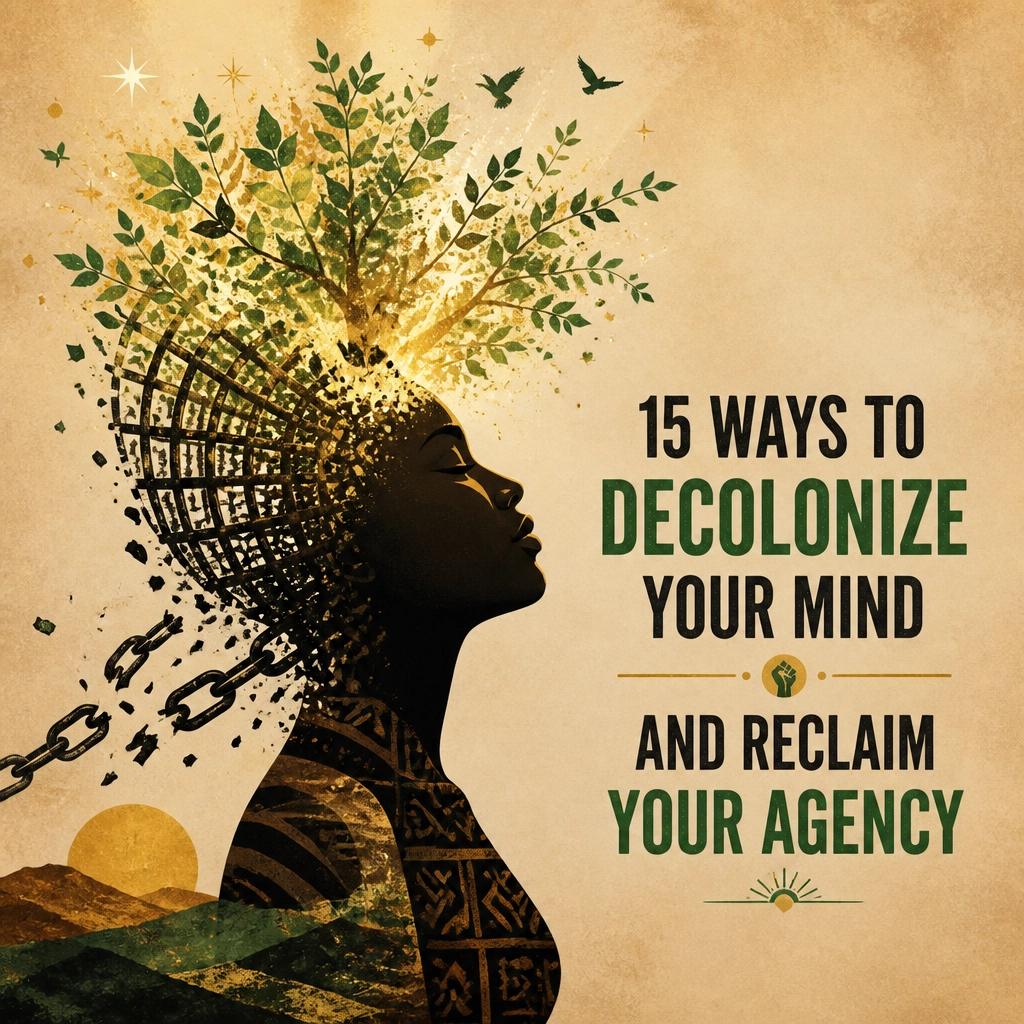
To decolonize the mind is to engage in a form of intellectual exorcism.
It is the refusal to see yourself through the eyes of the person who sought to own you.
It is a journey that requires the courage to be “Alike Regardless” of the hierarchies imposed upon us.
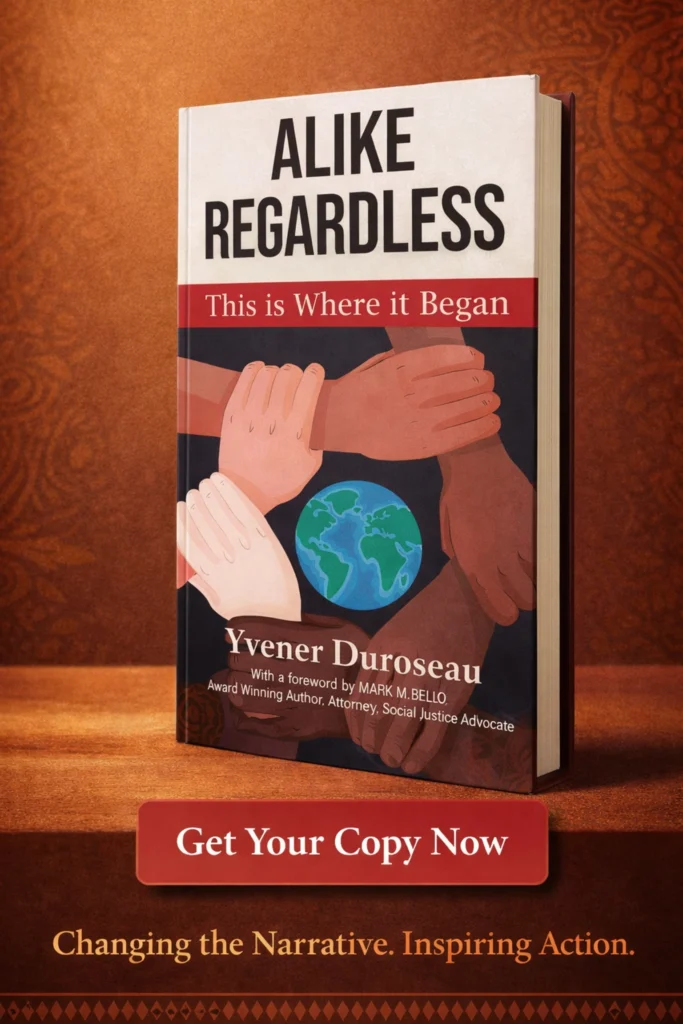
As I discuss in my book, Alike Regardless: This Is Where It Began, the pursuit of human unity begins with the radical act of self-reflection.
Without it, we are simply ghosts inhabiting a machine we did not build.
The Ghost of 1804 and the Price of Freedom
We cannot speak of agency without speaking of Haiti.
In 1804, the enslaved people of Saint-Domingue did the unthinkable.
They defeated the greatest military powers of Europe to establish the first Black republic.
They did not ask for permission to be free.
They seized it.
Yet, the world did not celebrate this triumph of human spirit; it punished it.
In 1825, France returned with warships, demanding an indemnity of 150 million francs for the “loss” of their “property.”
The property was the people themselves.
Haiti was forced to pay for its own existence.
This “Double Debt” functioned as a financial shackle that lasted for over a century.
It was a systemic attempt to ensure that Black agency would always be accompanied by economic ruin.
The message was clear: You may have broken your physical chains, but we will make sure you cannot afford to think like a free person.
This is the historical blueprint for the mental chains we still carry today.
We see it in the debates over reparations.
We see it in the refusal of Western museums to return looted art that belongs to the ancestors of the Global South.
When a nation keeps another’s artifacts, they are not just keeping art; they are keeping the narrative.
They are holding the memory of a people hostage.
To reclaim agency, we must first reclaim the memory.
The 15 Pathways to Mental Liberation
Decolonization is not a metaphor; it is a practice.
It is a series of deliberate choices made daily to strip away the “normalized” pathologies of empire.
1. Question the Definition of “Civilized”
We have been taught that civilization is a Western export.
It is not.
Civilization is the presence of community, justice, and ancestral wisdom, none of which require a European seal of approval.
2. Interrogate Your Language
Language is the “means of the spiritual subjugation,” as Ngũgĩ wa Thiong’o famously wrote in Decolonising the Mind.
Notice when you use words like “developed” or “primitive.”
Ask yourself who defined the scale.
3. Decouple Worth from Productivity
The “grind culture” we navigate is a direct descendant of the plantation.
It teaches us that our only value lies in what we can produce for the master.
Rest is an act of decolonial resistance.
4. Reclaim Ancestral Memory
Colonialism thrives on amnesia.
Learn the names of your ancestors.
Learn the stories that were not written in the textbooks of your conquerors.
5. Study the 1804 Revolution
Understand that your freedom was not a gift from a benevolent government.
It was a demand made by those who refused to be broken.
Let the spirit of 1804 inform your modern boundaries.
6. Challenge Inherited Religious Dogmas
Faith has often been used as a tool of pacification.
The courage to question.
The courage to seek a spirituality that sanctifies your own skin.
The courage to find God in the mirror, not just in a foreign book.
7. Audit Your Intellectual Inputs
Whose books are on your shelf?
Whose podcasts are in your ears?
If your entire world is curated by the West, your mind will never leave the colony.
8. Acknowledge the Reality of Reparations
Reparations are not a “handout.”
They are an overdue invoice for centuries of stolen labor and extracted resources.
Accepting this truth is the first step toward economic dignity.
9. Support the Return of Looted Art
The Benin Bronzes and the artifacts of the Taino belong in their homes.
To support their return is to support the restoration of a fractured identity.
10. Practice Somatic Grounding
Trauma lives in the body.
The colonial system teaches us to be numb to our own physical sensations.
To feel is to be human.
To be human is to be ungovernable.
11. Refuse the “Third World” Narrative
There is no “Third World.”
There is only a world that has been systematically under-developed by the greed of the “First.”
Change the adjective, and you change the power dynamic.
12. Seek Unity Beyond Hierarchies
We must move toward a state of being Alike Regardless.
This is not about erasing difference; it is about erasing the value we assign to difference.
13. Embrace Silence as Resistance
The empire demands constant noise and constant accessibility.
Reclaim your right to be private.
Reclaim your right to be unknown.
14. Dismantle the “Expert” Bias
We are conditioned to trust the person with the Western degree over the person with the ancestral experience.
True expertise is found in the lived reality of the oppressed.
15. Practice Collective Imagination
We cannot build what we cannot imagine.
Spend time dreaming of a world where the structures of colonialism no longer exist.
Then, act as if that world is already here.
A Modern Reflection on Fractured Identity
The work of decolonizing the mind is uncomfortable.
It is a surgery performed without anesthesia.
You will find that many of your most “sacred” beliefs are actually “internalized” traumas.
We have been conditioned to endure pain, rather than process it.
We have been taught to sanctify the systems that exclude us.
This is the “colonial mentality”: the belief that the master’s way is the only way.
But look at the world around us.
The systems of extraction are failing.
The narratives of supremacy are cracking.
There is a quiet urgency in the air.
It is the sound of the mind waking up.
The courage to see.
The courage to speak.
The courage to be whole in a world that profits from your fragmentation.
The Rebirth of the Agency
In my upcoming work on the Decolonization of the Mind, I delve deeper into these psychological landscapes.
For now, we must start with the basics of our humanity.
We must realize that the “mental chains” are only as strong as our willingness to believe in them.
Haiti proved that the physical chain could be broken.
Now, we must prove that the intellectual one can be shattered as well.
This is not a task for the faint of heart.
It is a task for the revolutionary.
It is a task for the person who is tired of living a life that was scripted for them by someone else.
Reclaiming your agency is the ultimate act of self-love.
It is the moment you stop being a footnote in history and start becoming the author.
The world is waiting for your story.
Make sure it is yours.
To begin this journey of self-reflection and unity, I invite you to read my first book, Alike Regardless: This Is Where It Began.
It is a guide for those ready to look beneath the surface of our divisions and find the common thread of our shared existence.
The revolution begins within.
The revolution is you.
Recommended Resource:
Purchase “Alike Regardless: This Is Where It Began” on Amazon