Category: Decolonization of the Mind
This article explores the psychological hurdles of unlearning colonial narratives and examines why true mental liberation requires more than just intellectual curiosity. We delve into the historical blueprint of the Haitian Revolution and provide actionable insights for reclaiming your narrative through the lens of Yvener Duroseau’s work.
Whose voice is speaking when you think?
Is it the voice of your ancestors, or the voice of the system that sought to erase them?
We live in a world where the architecture of our thoughts was designed by people who never intended for us to be free.
We carry maps in our heads drawn by explorers who were actually invaders.
We speak languages that were forced upon our tongues to stifle our screams.
The process of decolonization is not a trend; it is a clinical excavation of the self.
It is a messy, violent, and necessary dismantling of the "normalized" insanity we call modern society.
But in our rush to "decolonize," we often trip over the very chains we are trying to break.
We mistake the shadow for the object.
We mistake the symptom for the cure.
If you are on this journey, you are likely making one of these seven mistakes.
1. You Think Representation is Decolonization
We see a Black face in a high place and we call it progress.
We see a statue removed and we call it victory.
But representation without a change in power is just a new coat of paint on a crumbling prison.
You can change the pilot, but if the plane is still heading toward a colonial destination, you are still colonized.
Diversity is about being invited to the table; decolonization is about questioning why the table exists in the first place.
It is about understanding that the "colonial mentality" persists even when the skin color of the oppressor changes.
We must stop seeking a seat and start building a new house.
2. You Are Treating It Like an Intellectual Exercise
The mind is not a separate entity from the body.
You cannot think your way out of a trauma that is stored in your nervous system.
Many people read the right books and cite the right scholars, yet they live in the same state of "internalized" fear.
They have "fractured" identities where the head knows the truth, but the heart still seeks validation from the system.
Decolonization is visceral.
It is the courage to feel the pain of what was lost.
The courage to sit with the discomfort of your own complicity.
The courage to breathe in a way that the system told you was forbidden.
3. You Are Ignoring the Weaponry of Language
Language is the first frontier of colonization.
In Haiti, the battle between French and Kreyòl is not just about words; it is about who is allowed to be "intellectual."
When we prioritize colonial languages over our mother tongues, we "sanctify" the colonizer’s logic.
We assume that complex thoughts can only be expressed in the language of the university.
But some of the most profound Haitian revolution facts were whispered in Kreyòl under the cover of night.
The revolution didn't happen in the parlor; it happened in the soul of a language the masters couldn't understand.
If you are not reclaiming your linguistic heritage, your thoughts are still being filtered through an enemy’s lens.

4. You Are Seeking Validation from the System You Are Critiquing
This is the most subtle trap.
We write "decolonial" dissertations to get degrees from colonial institutions.
We seek "woke" status in spaces that profit from our marginalization.
Not to process pain, but to endure it.
Not to find truth, but to find acceptance.
If your liberation requires the approval of the system that shackled you, it isn't liberation.
True mental sovereignty means being okay with being misunderstood by those who benefit from your confusion.
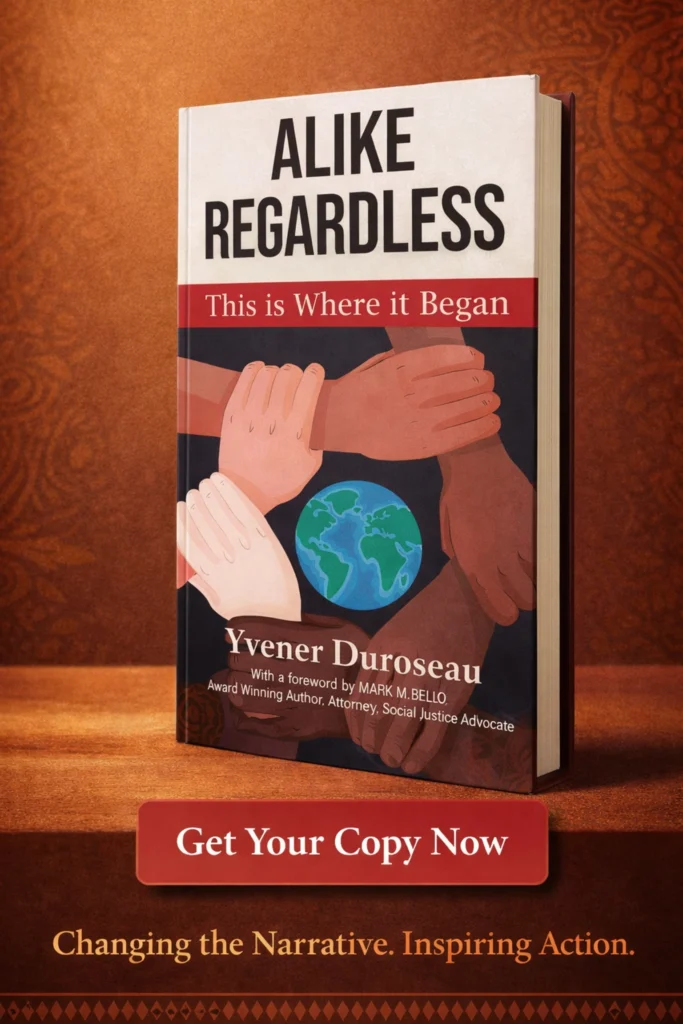
In my book, Alike Regardless: This Is Where It Began, I explore how we must find unity through self-reflection rather than external permission.
We must learn to look at ourselves through our own eyes.
5. You Have Disconnected from the Ancestral Blueprint
We treat decolonization like a new academic theory.
It isn't new.
It was practiced in 1791 at Bois Caïman.
It was practiced by every Maroon who chose the mountains over the whip.
The Haitian Revolution was the ultimate act of decolonizing the mind before the body could ever be free.
They had to believe they were human when the world said they were property.
They had to believe they could win when the world said they were destined to lose.
If you are not grounding your work in the history of those who actually did the work, you are just spinning wheels in a vacuum.
The history of Haiti is not just a series of dates; it is a manual for mental survival.
6. You Are Confusing Faith with Colonial Religion
Religion has been used to "normalize" the hierarchy of worth.
It has been used to tell the oppressed that their suffering is "godly" while the oppressor’s wealth is a "blessing."
Decolonizing the mind requires a radical re-examination of what we have been taught to worship.
We must ask: Does my faith empower me, or does it keep me waiting for a heaven that looks like the country that colonized me?
We must have the intellectual bravery to separate the Divine from the dogma of the empire.
We must "sanctify" our own connection to the spirit.
7. You Think You Are "Done"
Decolonization is not a destination.
It is a perpetual state of hygiene.
The colonial system is like dust; it settles on everything, every day.
It settles on your taste in art.
It settles on your definitions of beauty.
It settles on how you parent your children.
The moment you think you are "decolonized" is the moment you stop looking for the hidden wires.
We must remain vigilant.
We must remain reflective.

The Historical Mirror: Haiti’s Legacy
To understand these mistakes, we must look at the mirror of history.
The Haitian Revolution remains the most "thought-provoking" event in modern history because it was a total rejection of the colonial narrative.
While the French were talking about the "Rights of Man" while keeping people in chains, the Haitians were actually living those rights.
They decolonized the Enlightenment.
They took the European ideals of liberty and actually made them universal.
This wasn't just a military victory; it was a psychological earthquake.
It proved that the "colonial mentality" could be shattered.
Today, we see the echoes of this struggle in the global movement for reparations and the return of looted art.
The empty pedestals in European museums are not just about objects; they are about the reclamation of memory.
When we demand our history back, we are demanding our minds back.

Moving Toward Mental Sovereignty
How do we fix these mistakes?
We start by admitting that we are "fractured."
We start by reading works that challenge our comfort, like Alike Regardless: This Is Where It Began.
In that work, I argue that the path forward isn't just about fighting "them": it’s about finding "us."
It’s about the hard, quiet work of self-reclamation.
As I look toward my upcoming work on the Decolonization of the Mind, I am reminded that this is the defining struggle of our century.
We have broken the physical chains.
Now, we must break the mental ones.
The courage to question.
The courage to remember.
The courage to be whole.
Stop seeking the master’s tools to dismantle the master’s house.
Build your own tools.
Speak your own truth.
Reclaim your own soul.
You are not what they told you you were.
You are the revolution that hasn't happened yet.
Take the first step toward that revolution today. Pick up a copy of Alike Regardless: This Is Where It Began and begin the excavation.
The mind is the final frontier.
Let’s cross it together.