Category: Decolonization of the Mind
Overview: Real freedom is not merely the absence of physical chains; it is the active dismantling of the mental structures that dictate how we see ourselves and the world. This post explores ten critical insights into the decolonization of the mind, grounding psychological liberation in the historical weight of the Haitian Revolution and the modern fight for cultural restitution.
Do you own your thoughts, or are you merely leasing them from a history that never intended for you to be free?
We often speak of liberation as a physical event.
A flag is raised.
A document is signed.
A border is drawn.
But the most resilient borders are the ones we cannot see.
They are the borders of the psyche.
They are the internalized hierarchies that tell us which language is "proper," which faith is "civilized," and which history is "relevant."
I spent years believing that my education was a ladder.
I did not realize it was also a filter.
It filtered out the brilliance of my ancestors and replaced it with a polished, Eurocentric mirror.
To look for real freedom is to shatter that mirror.
It is to realize that the colonial project did not end when the soldiers left; it simply moved into the classroom, the church, and the mirror.
Here are ten things you should know about the decolonization of the mind.
1. Language is the First Frontier
Ngũgĩ wa Thiong’o once wrote that language is the "collective memory-bank of a people’s experience in history."
When a colonial language is forced upon a people, it isn't just about communication.
It is about redirection.
It forces the speaker to see the world through the metaphors of the colonizer.
To decolonize is to reclaim the right to name our own reality.
2. The 1804 Miracle is a Mental Blueprint
The Haitian Revolution was not just a military victory.
It was a psychological explosion.
In 1804, a nation of enslaved people did the unthinkable: they imagined a world where they were human.
They did not wait for permission to exist.
They did not seek validation from the powers that sought to crush them.
These Haitian revolution facts remind us that mental liberation must precede political sovereignty.

3. The "Standard" is a Myth
We are taught to measure our worth against a "standard."
Standard English.
Standard beauty.
Standard history.
But the standard is often just the preference of the powerful, sanctified by time.
The decolonization of the mind requires us to ask: Who set the standard?
And why am I trying to fit into a box that was built to exclude me?
4. Faith Can Be a Weapon or a Wellspring
Religion has often been used to sanctify subjugation.
It has been used to tell the oppressed that their suffering is divine.
It has been used to paint the colonizer as a savior.
But a decolonized faith looks different.
It finds the divine in the struggle for justice.
It refuses to worship a God that looks like the person who holds the whip.
5. The Geography of Worth is Fractured
Consider the looted art sitting in European museums.
The Benin Bronzes.
The sacred artifacts of the Kingdom of Dahomey.
When these objects are stolen, a community's connection to its past is severed.
Restitution is not just about returning bronze and wood.
It is about returning the right to hold one's own history.

6. Education is Often a "Cultural Bomb"
The classroom can be a site of profound trauma.
It can teach a child that their culture is a "wasteland of non-achievement."
It can teach a child to admire the very forces that erased their lineage.
We must learn to unlearn.
We must seek knowledge that restores rather than replaces.
7. Reparations are More Than a Check
We talk about reparations in terms of currency.
But there is a debt that money cannot pay.
There is the debt of stolen potential.
There is the debt of fractured identity.
Real reparations require a repair of the narrative.
They require an honest accounting of how colonial mentality continues to shape global power systems today.
8. Memory is an Act of Resistance
To remember is to refuse to be erased.
In a world that wants us to move on, remembering the details of our struggle is a radical act.
We must remember the names.
We must remember the rituals.
We must remember the ways we survived before the "civilizers" arrived.
9. The Burden of the Internalized Gaze
We often perform for an audience that isn't even in the room.
We check our tone.
We adjust our hair.
We soften our truths.
This is the internalized gaze: the colonizer living in the back of the mind.
The courage to be.
The courage to speak.
The courage to fail on our own terms.
10. Unity is the Ultimate Goal
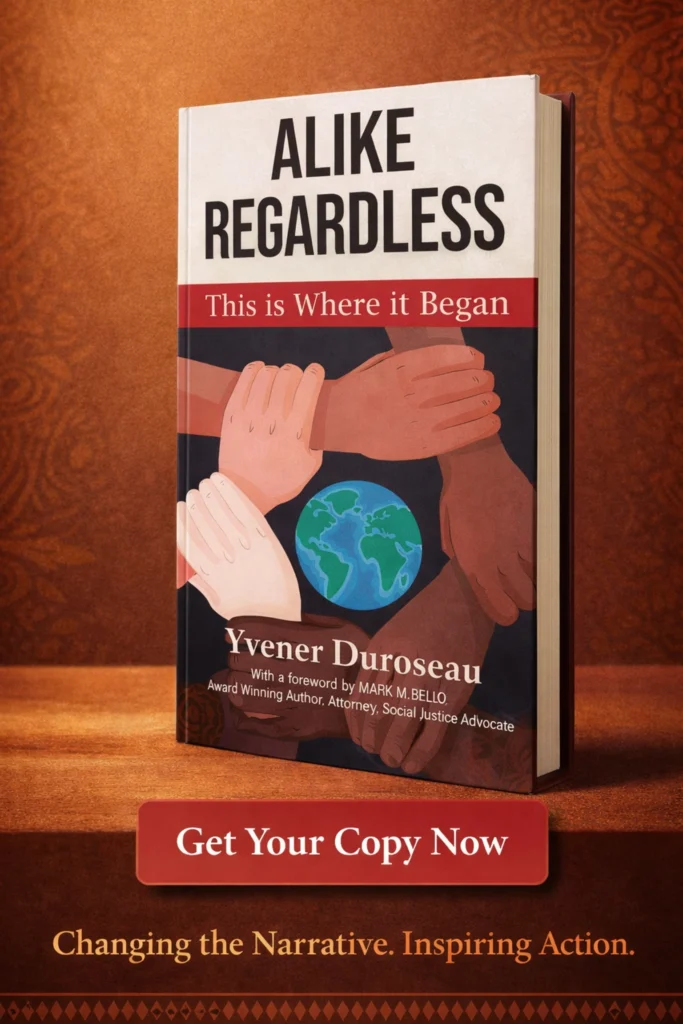
In my book, Alike Regardless: This Is Where It Began, I explore the idea that our common humanity is the key to our liberation.
The colonial system survives on division.
It survives by convincing us that our differences are walls rather than windows.
When we strip away the inherited hatreds, we find something terrifyingly beautiful: each other.
Unity is not the erasure of difference; it is the refusal to let difference be used as a tool of oppression.

The Long Road Back to Self
Decolonizing the mind is not a one-time event.
It is a daily practice.
It is the quiet urgency of reclaiming your own soul.
It is the realization that the mind is the final colony.
And the final battle for freedom happens within.
As I look toward my forthcoming work on the Decolonization of the Mind, I am reminded that this journey is both personal and collective.
We must have the intellectual bravery to question everything we have been told.
Not to process pain, but to transform it.
Not to endure the narrative, but to rewrite it.
The courage to look.
The courage to see.
The courage to be free.
If you are ready to begin this journey of self-reflection and global understanding, I invite you to read Alike Regardless: This Is Where It Began.
It is a place to start.
It is a place to remember who we were before we were told who we should be.
The mind is a vast landscape.
It is time we stopped letting others draw the maps.